
Shopping Cart
- Sabra Veronesi
- Buying Guides About Dance Shoes
- 0 likes
- 40924 views
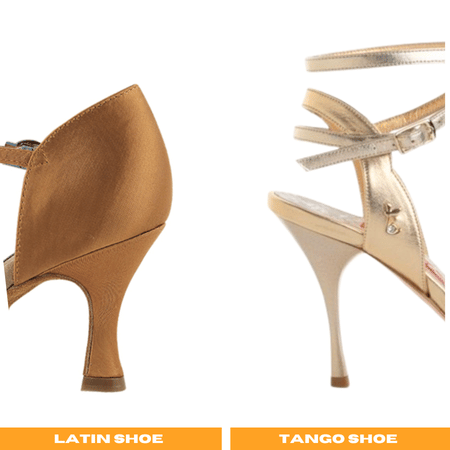
What is the difference between salsa and tango shoes?
Basically, tango shoes and salsa shoes are quite different in terms of their soles and heel styles.
The sole of salsa shoes
Salsa shoes are modelled on classic Latin dance shoes. They usually have a soft and flexible chrome leather sole. Chrome suede leather is a specially treated suede that offers the ideal combination of glide and grip. This allows dancers to execute turns in a controlled manner without sticking to the floor or slipping uncontrollably.
Greater stability thanks to a closed heel cap
Another important difference is the heel construction. Most salsa and Latin shoes feature a closed heel cap. This encases the heel and provides greater stability, particularly during quick changes of direction, turns and dynamic movements. This ensures the foot sits securely in the shoe and provides additional support.
The typical salsa heel
The heel of a salsa shoe originates from Latin dance and is known as a flare heel. It is elegantly curved in the middle and widens towards the bottom. This shape increases the contact area and ensures a secure footing without restricting mobility.
Tango shoes – designed for precise movements
Tango shoes differ from salsa shoes in several respects. They usually have a smooth leather sole, which is significantly harder and less flexible than a chrome-leather sole. On the smooth floors where tango is predominantly danced, this allows for particularly smooth gliding and precise footwork. For salsa or other Latin dances, however, this sole would usually be too slippery.
The heel also differs significantly.
Tango shoes often have a higher and slimmer heel, frequently referred to as a pencil heel. This supports the elegant posture and characteristic dance technique of the Argentine tango.
Open heel for greater freedom of movement.
Unlike salsa and Latin shoes, many tango shoes have an open heel, secured with delicate straps. This design gives the shoe a particularly elegant look and allows the foot greater freedom of movement. At the same time, the adjustable straps ensure that the shoe stays securely on the foot. Which style is more comfortable ultimately depends on the individual shape of the foot and personal preferences.
As salsa and tango place different demands on movement and technique, it is worth using dance shoes specifically designed for each style. This way, you’ll benefit from optimum comfort, better control and a longer lifespan for your dance shoes. It’s best to seek advice at Veryfine Dance Shoes Zürich and try out the difference for yourself.